Contents
In briefWhat changedWhat it coversWhat we sawWhat to doOur takeRelated service
Shopify Agentic Commerce →What changed this week
Shopify announced on 24 March 2026 that millions of merchants can now sell to ChatGPT users through Agentic Storefronts. Products are discoverable in ChatGPT by default, no separate integration or app is required, and there are no transaction fees beyond standard processing rates. The same channel framework covers Microsoft Copilot, AI Mode in Google Search and the Gemini app, managed centrally from the Shopify admin.
Agentic Storefronts itself was introduced in the Winter ’26 Edition in December 2025. This week the default flipped, so you are in the channel unless you switch it off, and the Help Center now says so plainly: agentic storefronts is active by default for eligible stores.
Shopify also opened an Agentic plan for brands that do not run their ecommerce on Shopify at all, letting them add products to Shopify Catalog and become shoppable across the same AI channels. Shopify is assembling the catalogue it wants every AI platform to read, drawing from well beyond its own merchant base.
What "by default" covers
Eligibility runs through Shopify Catalog. A store whose products qualify, whose policy pages are completed in settings, and whose owner has agreed the Agentic Storefronts supplemental terms is in, and each AI channel can be toggled individually under the Sales channels section of the admin. Google AI Mode and Gemini remain in early access, so that pair is not yet available to every store.
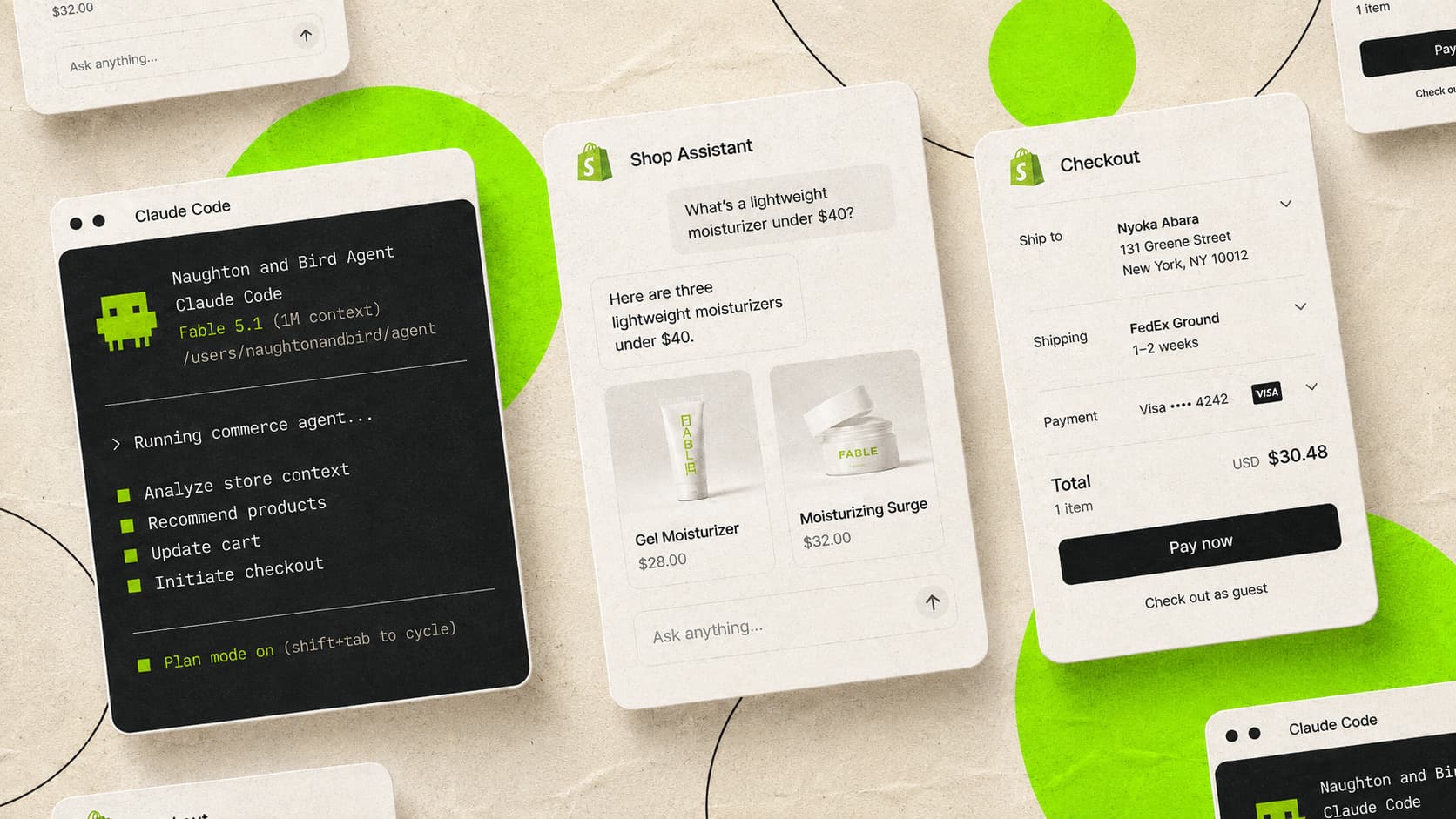
Read the transaction model closely: discovery happens in the AI surface and the purchase happens on your own store. On mobile, ChatGPT buyers complete purchases through an in-app browser, and on desktop ChatGPT links out directly to the merchant's store in a separate tab, so your store, your data and your experience still close the sale.
The machinery underneath: Shopify Catalog
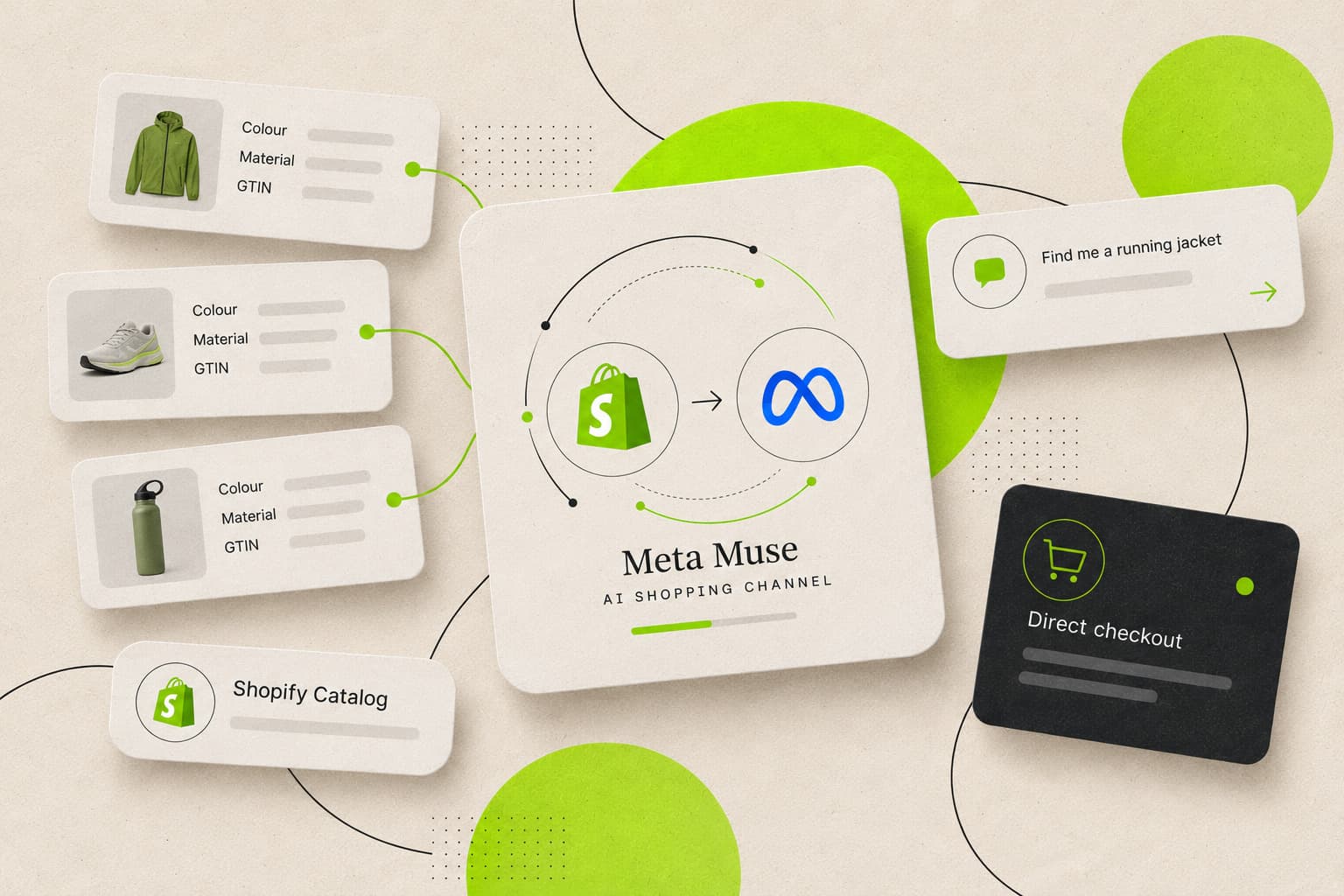
The channel runs on Shopify Catalog, which structures product data from millions of stores so AI platforms can read it: inferring categories, extracting attributes, consolidating variants and clustering identical items, with prices and inventory kept current and orders attributed back to the originating channel in the admin.
Shopify's own models do that structuring, and they work from whatever your product data contains, so clean titles, complete attributes and specific descriptions give the Catalog something to work with, and thin data gets standardised into thin listings that the AI channels inherit.
Being in the channel is not the same as winning it
Every eligible competitor entered the channel the same week you did. The agent answering a buyer's question now has millions of stores to draw on, and it chooses on the data it can read: product detail, policy clarity, the signals that make one store the confident recommendation for a category.
That makes this switch the strongest argument yet for the fundamentals, because the channel rewards the store whose data answers the buyer's question precisely, and being in it earns nothing on its own. What that preparation involves is the subject of our discovery-ready definition.
What we saw when we checked
The switch is visible in any store admin under Sales channels. When we checked stores we work with this week, the Agentic section was present and active, with channel toggles nobody had reviewed and default presentation nobody had configured, and not one team had been told the channel existed.
That is no criticism of the teams, because the rollout was designed to need nothing from them. It does mean what the AI channels now show is whatever state your product data and policies were in when the switch flipped, and that state needs reviewing because sales now depend on it.
What to do in your admin this week
- Open Sales channels in the Shopify admin and find the Agentic section, confirming which AI channels are active for your store.
- Decide channel by channel whether you want to be there. For discovery the answer is usually yes, and any channel you would rather not be in can be switched off.
- Complete or review the three policy pages in settings, because eligibility and agent answers both draw on them.
- Read your top products the way the Catalog will: titles, attributes, variants and descriptions, as structured data rather than brand copy.
None of this is difficult, and most of it belongs to whoever already owns your product data, so treat this week as a data-quality deadline.
Our take
The week this switched on, our clients came back with good synthesised responses, because the fundamentals were already in place and the stores were discovery-ready. The prospects were a different story, because across the enquiries we see, including the free audits, a staggering number were missing the cornerstones of being agentic-ready.
Brand owners ask us whether this matters yet. Our view is that it matters if you want to lead your category, because this is where search is now and where it is heading, and the brands that get there first set the standard the rest are measured against. There are businesses for which the agentic discovery channel is a smaller part of the mix, a purely influencer-led brand for instance, and the question is fair there. For the premium brands we work with, discovery is a pillar of the commercial model, so it matters a great deal.
Sources & references
- Shopify, Agentic commerce momentum: millions of merchants can now sell to ChatGPT users(shopify.com)
- Shopify, Winter ’26 Edition: Introducing Agentic Storefronts(shopify.com)
- Shopify Help Center, Shopify agentic storefronts(help.shopify.com)
- Shopify Help Center, Requirements and considerations for selling on agentic storefronts(help.shopify.com)